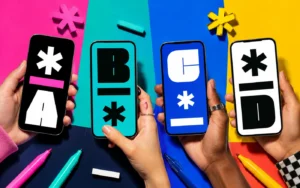
TikTok’s official open-source typeface is TikTok Sans. TikTok describes it as the default font used in millions of videos, with a variable family built for high-DPI mobile interfaces and broad Latin, Greek, and Cyrillic language support. That real font is different from the Unicode “TikTok fonts” people paste into display names and bios.
Last reviewed: August 31, 2026
TikTok uses TikTok Sans as its official typeface
TikTok maintains a public TikTok Sans repository and a Google Fonts listing. The project calls the family free and open source and says viewers may recognize it as the default font used in millions of TikTok videos.
A TikTok screen can still contain other lettering. Creators add text through templates, editors, effects, and uploaded graphics. System UI and language-specific fallbacks may also change what you see. “TikTok uses TikTok Sans” is the brand-level answer, not a claim that every pixel in every video uses one family.
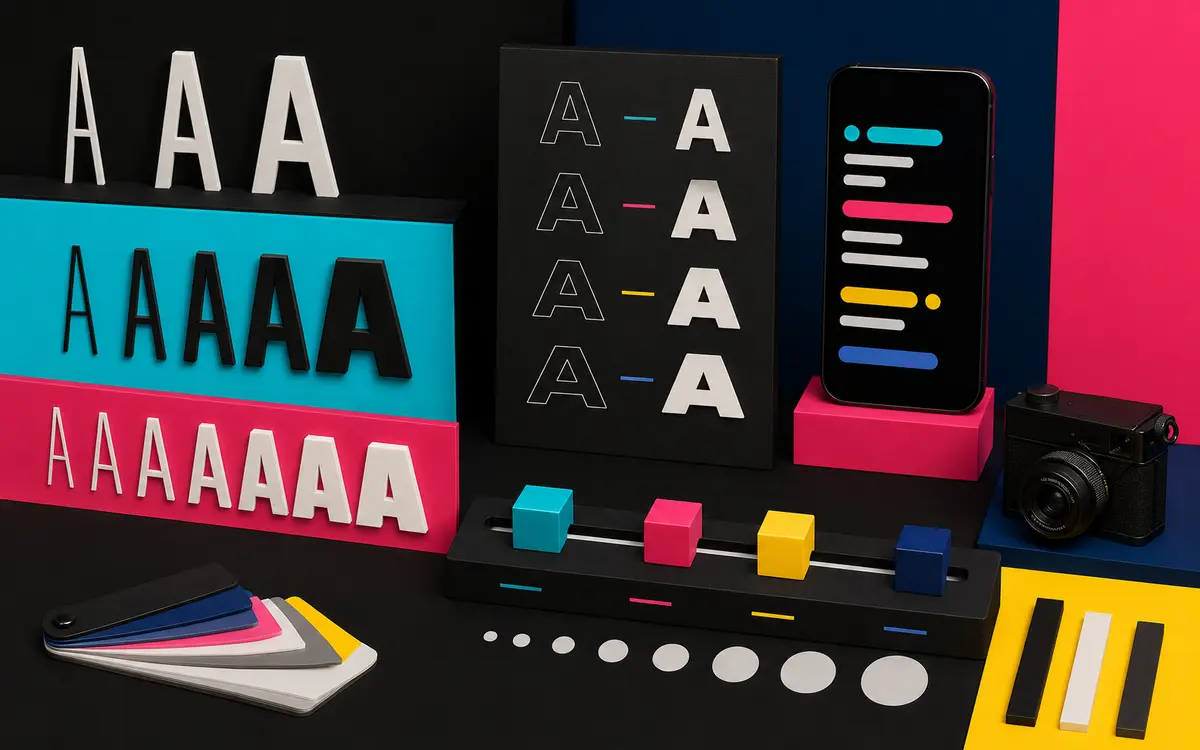
TikTok Sans is designed as a flexible variable family
The official repository lists four variable axes: Weight, Width, Slant, and Optical Size. That lets one font system adapt from compact interface labels to larger captions without depending on dozens of unrelated files.
The project also highlights tabular numerals, character variants, high-DPI mobile optimization, and manual TrueType hinting. Those are practical engineering details: numbers can align in tables, alternates can solve ambiguous shapes, and hinting helps small text render more consistently.
| Feature | Why it matters |
|---|---|
| Weight axis | Moves from light to strong emphasis |
| Width axis | Fits narrow or wide layouts |
| Slant axis | Adds an angled voice without a separate family |
| Optical Size axis | Adjusts drawing for display or text sizes |
| Tabular numerals | Keeps changing numbers aligned |
TikTok Sans supports more than 460 languages—with limits
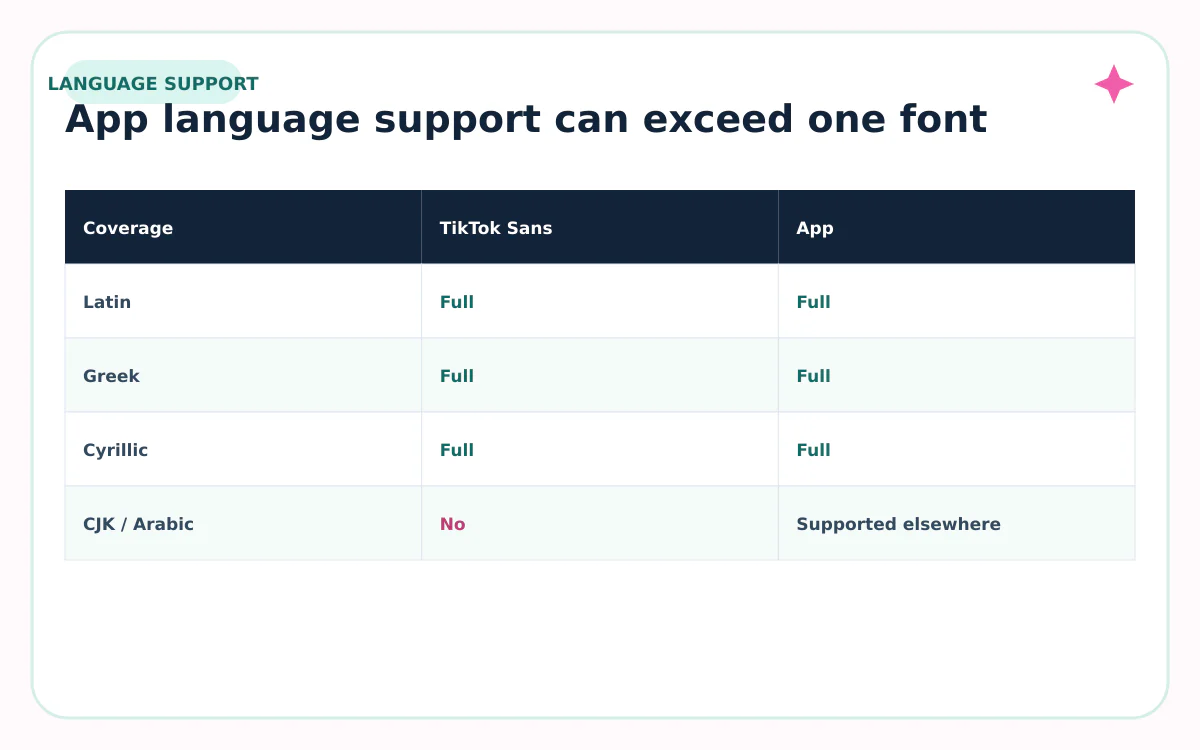
TikTok’s repository says the family supports more than 460 languages across Latin, Greek, and Cyrillic. It also lists languages used in the TikTok app that the font itself does not cover, including Arabic, Hebrew, Hindi, Urdu, Bangla, Thai, Khmer, Burmese, Chinese, Japanese, and Korean.
That distinction matters. The TikTok app can support a language through another typeface or fallback system even when TikTok Sans does not contain the required writing system. Do not force Latin lookalikes onto names or words from another script.
Where to download TikTok Sans and what the license allows
The official project links to Google Fonts and publishes the family under the SIL Open Font License 1.1. The repository includes source files plus static and variable build formats.
The OFL generally allows use, study, modification, redistribution, and bundling under its conditions. Read the actual license before redistributing font software or renaming a modified version. A graphic or video created with the font is not the same thing as reselling the font file by itself.
- Open the official TikTok Sans repository or Google Fonts page.
- Download the family and keep the license file with your source assets.
- Install the static styles or load the variable font in a compatible editor.
- Check that your editor exposes the axes you need.
- Export a short phone-size proof before building the full project.
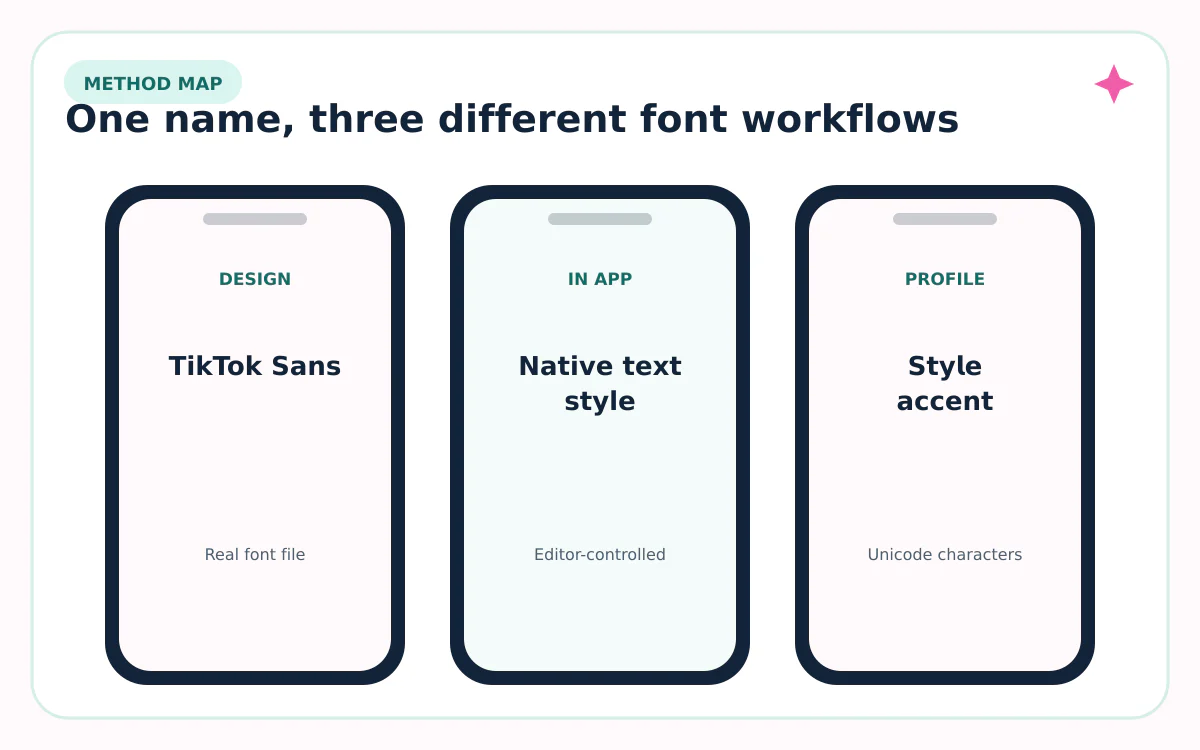
TikTok Sans and copy-and-paste TikTok fonts solve different problems
| Option | What changes | Best for | Limitation |
|---|---|---|---|
| TikTok Sans | The typeface drawing | Video captions and designs you control | Must be installed or supported |
| TikTok in-app style | Formatting inside the app | Native creation workflows | Options vary by surface |
| Unicode text | The characters themselves | Short display-name or bio accents | Search and accessibility can change |
Use TikTok Sans when you are designing editable captions, thumbnails, motion graphics, or brand materials. Use the app’s own styles when you want native editing. Use Unicode only for a short decorative field that accepts the result—and keep the unique @username plain because TikTok limits username characters.
The final TikTok composer is authoritative. Paste-test the exact text, then check it on another phone before publishing.
Sources reviewed
Platform features and character rules can change. We checked the first-party and standards sources below on August 31, 2026.
Frequently asked questions
Is TikTok Sans free?
TikTok publishes TikTok Sans as a free, open-source family under the SIL Open Font License 1.1. Read and keep the license terms with the font files.
Where can I download the official TikTok font?
Use TikTok’s official TikTokSans GitHub repository or its linked Google Fonts page.
Is TikTok Sans the same as TikTok copy-and-paste fonts?
No. TikTok Sans is a real typeface applied to ordinary characters. Copy-and-paste tools substitute Unicode characters.
Does TikTok Sans support every language in the TikTok app?
No. TikTok lists broad Latin, Greek, and Cyrillic coverage and separately names app languages that use other font support.
Can I use TikTok Sans in Canva?
Search Canva’s current library first. If it is unavailable and your plan supports font uploads, review the OFL and Canva’s upload rules before adding the official files.